
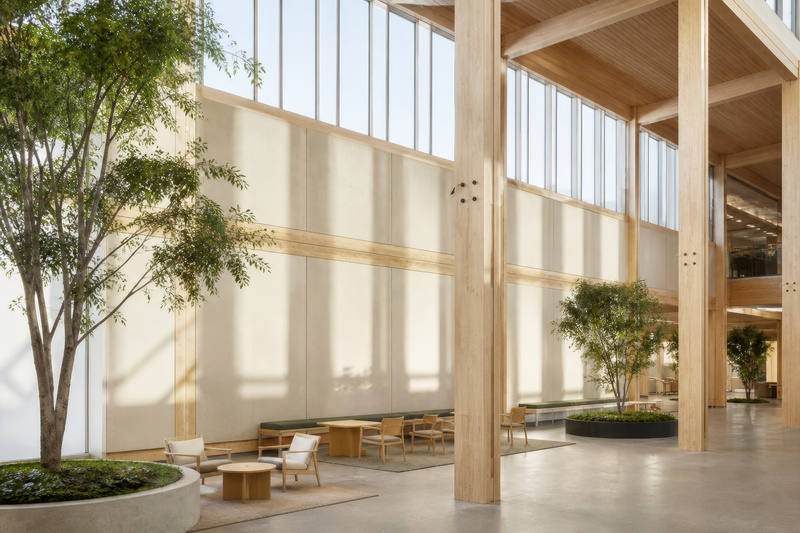
Office atria had a strange few years. Buildings that were designed around a busy ground floor sat largely empty, maintenance budgets got trimmed because nobody was there to be inconvenienced, and the glass roof over the lobby dropped a long way down everyone’s list.
Occupancy has come back, unevenly but genuinely, and a lot of landlords are now looking up at a roof that had three or four quiet years. Some of that neglect is cosmetic. Some of it isn’t.
What a quiet period did to the glass
Deferred cleaning is the visible part. Atrium roofs sit flat or at a shallow pitch, so they hold whatever lands on them, and a film left to dry and rewet repeatedly bonds harder each time. Three years of that doesn’t come off with the effort a single year would have taken.
Bird fouling is the worse version. It’s acidic enough that a summer left on the glass can mark the surface permanently rather than just dirty it, and a quiet building is a more attractive nesting site than a busy one.
Underneath the cosmetics, the components carried on ageing on schedule. Gaskets shrank, perimeter sealant hardened, edge seals on units reached the end of their working lives. None of that paused, and in a building with no footfall there was nobody to notice the first stain on a wall.
Drainage is the one that compounds. Gutters that went uncleared for several autumns silt up, outlets block, and water sits on a roof that was designed to shed it.
Why it matters more now than it did
Occupancy puts people underneath the glass again, which changes the risk calculation on anything overhead. It also changes who sees the building.
Office lettings are competitive in a way they weren’t, and the lobby is the first thing a prospective tenant walks into. A dull atrium roof over a gloomy reception does measurable damage to that first impression, and it’s the kind of damage that’s hard to argue away in a rent negotiation.
Then there’s the daylight argument, which has become a selling point rather than a detail. Workplace design has swung towards natural light and open volumes as part of the case for coming into the office at all, and the atrium is the main instrument for delivering that. Dull glass cuts light transmission more than people expect, so a roof that hasn’t been cleaned properly in years is working against the thing the building is marketing.
Comfort complaints arrive with the people. Overheating under the glass in summer, cold downdraught in winter, and both get reported now that there’s someone sitting there to report them. Early or degraded coatings let solar gain through that a current unit would reflect, and a failed perimeter joint is an air leakage path at the top of a tall space.
Where the money goes if you’re catching up
The sensible sequence is survey, then clean, then decide. Not the other way round.
A close-access survey establishes what actually happened during the quiet years: condition of the perimeter seals, gasket shrinkage, how many units have misted, state of the framework, whether the drainage works. That’s a few hours of access and it tells you whether you’re facing a maintenance item or a capital one.
Doing the clean at the same visit is the obvious efficiency, since access is the dominant cost and one mobilisation is cheaper than two. Buildings that have fallen behind usually need a restorative clean first and a normal cycle afterwards. The Glass and Glazing Federation is a reasonable first stop for checking who holds what accreditation before you appoint anyone.
Where the survey points at upgrade rather than repair, it’s worth taking the specification question seriously rather than replacing like for like. The glass has to come out anyway, which makes it the one practical moment to improve thermal and solar performance. The Centre for Window and Cladding Technology publishes the performance guidance that specification usually references, and loading needs checking because modern high-performance units are often heavier than what’s coming out.
Smoke ventilation built into the atrium roof deserves a check in the same exercise. Vents that haven’t been operated for years don’t always operate when asked.
The budget argument that works
Atrium maintenance competes badly for money because it’s invisible until it fails. The argument that lands with a board is the same one that applies to the rest of the building fabric: the cheap money is the inspection and the clean, because that’s what tells you about everything else in time to plan it.
A building with a current survey and a cleaning cycle replaces one failed pane next year by looking it up. A building without one pays for discovery, access and a survey before anyone quotes for glass, and the same logic that governs specifying glass partitions against solid construction in an office applies overhead, except that the consequences of getting it wrong arrive as water.
Contractors who handle the access and the glazing as one discipline, https://skyaccessglazing.co.uk/commercial-glazing-services/maintenance among them, can usually combine the survey and the clean in a single visit.
Book the survey before the lettings campaign rather than after it. Finding out about a failed perimeter joint from a prospective tenant’s building surveyor is the expensive way to learn it.