
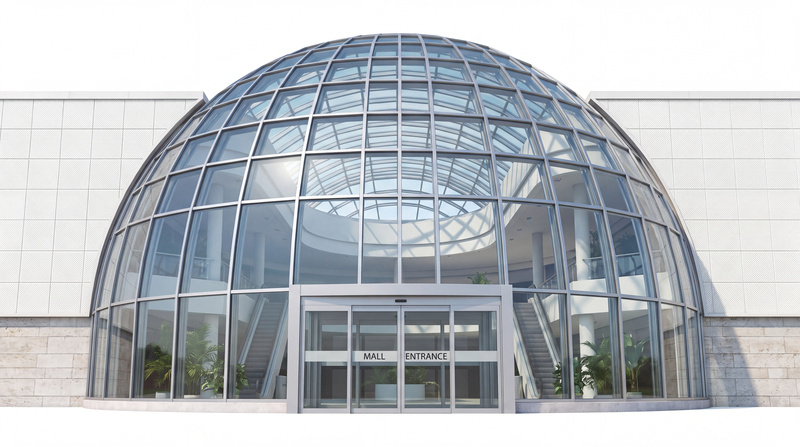
Three quotes for the same atrium can arrive with a spread wide enough to make you doubt they looked at the same building. Usually they didn’t, in any meaningful sense, because the brief left each of them to decide what the job was.
A good brief doesn’t need technical language. It needs to pin down the handful of things contractors would otherwise assume differently, and every one of those assumptions has a price attached.
Say what the building is and what’s underneath
Start with the part that decides the method. Height to the glass, the pitch, and what occupies the floor below.
A lobby that can be closed for a fortnight and a trading floor that can’t are two different jobs on identical glass. So are an atrium over a solid ground slab and one over a basement car park, because the second rules out mobile plant until a structural engineer says otherwise.
Say what the floor is, what’s beneath it, and whether a slab design exists. Say whether there are tested anchor points or structural steel that could be rigged from, and whether the test certificates can be produced. Contractors who are told none of this either price for scaffold to be safe, which looks expensive, or price for ropes and discover there’s nothing to rig from, which looks cheap until the variation arrives.
Describe the fault, not the remedy
This is where most briefs go wrong. “Reseal the perimeter” is a remedy, and if the water is coming in through a blocked outlet you’ll get a resealed perimeter and a leak.
Describe what you see, when you see it, and for how long it’s been happening. Water during rain or on cold mornings. Where it appears inside. Whether it stops when the rain stops. Whether the marks are clean water or dirty. Whether anything was done about it before, by whom, and when.
The repair history matters more than it sounds. An atrium that has had three previous patches is a different job from one that hasn’t, because the junctions between other people’s repairs are where water gets in, and working out which seal is original takes time on a rope.
Water tracks along steelwork before it appears, so where it shows up inside is evidence rather than a location, and nobody can shorten that search from the floor.
Hand over whatever records exist
Original drawings, the glazing specification, previous inspection reports, the name of the installing contractor, any warranty paperwork. Even a partial set changes the price, because the survey time comes down.
Where nothing exists, say so plainly. A contractor who knows the records are gone will price a survey properly. One who assumes drawings will turn up prices without it and adds the cost later.
Be specific about access constraints and timing
Working hours, whether out-of-hours is available, whether the space can be closed and for how long, what the permit regime is, whether there’s a lift that takes materials, what the route in is, door widths included.
Say what can’t be moved. A bolted reception desk, a feature staircase, mature planting. Those decide where a machine can stand, and a plan drawn without them is a plan that gets redrawn on site.
If the building has a seasonal window, say so in the brief rather than at the programming stage. Retail can’t do the run-up to Christmas, education works in vacations, and a contractor who finds that out after quoting has to reprice.
Separate the survey from the work
The cleanest way to get comparable quotes on an older atrium is to commission the survey as its own piece of work, then brief the remedial work against what it found.
That way all three contractors are pricing the same defined scope instead of each pricing their own guess at it. It costs one survey fee and removes most of the spread, which usually pays for itself several times over.
Ask for the survey report in a comparable form: photographs from stated positions, a defect register, and a view on what’s maintenance and what’s becoming capital. Inspection guidance from the Centre for Window and Cladding Technology is what most specifications reference, and asking for it by name tends to raise the standard of what comes back.
What to ask of the quote itself
Four things worth requiring in writing.
How the access is being achieved, and on what authority for the loading or the anchors. Whether the access and the glazing are both in-house or one is subcontracted, because that decides who you call when they disagree. What the rescue arrangement is, named rather than implied, as the Work at Height Regulations require the plan to set out. And what’s excluded, stated explicitly, because exclusions are where the variations live.
Contractors who hold both disciplines in one business, high-level specialists like Sky Access among them, have no commercial reason to steer the method towards the kit they happen to own. It’s worth knowing which kind of firm you’re reading when two quotes disagree about how to get up there.
Where glazed partitions or screens are part of the same space, put them in the same brief. The comparison between glass office partitions and traditional ones covers what tends to come up, and a single mobilisation covering both is cheaper than two.
The brief is the cheapest part of the project to get right and the only part you can still change for nothing.