
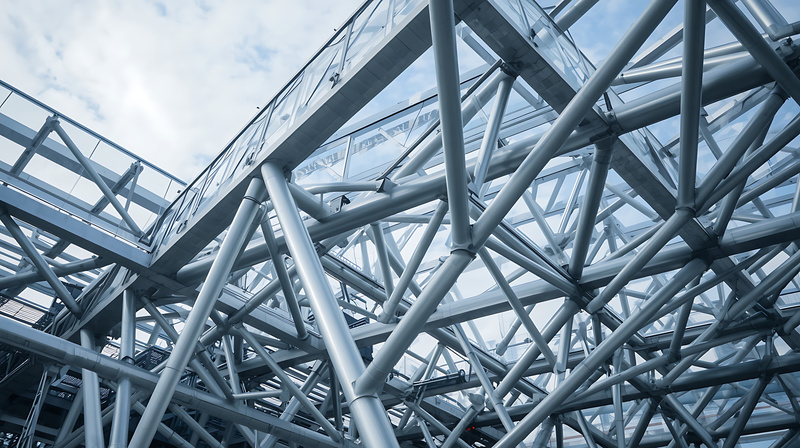
Ask the facilities team in a building with a large atrium where the energy goes, and the glass roof is usually high on the list. They’re generally right, and it’s not only a winter problem. The same roof that bleeds heat in January turns the space into a greenhouse by late June.
Upgrading it is a real option. It’s also a bigger job than it sounds, and the sequence you do it in decides whether it pays back.
What makes an older atrium roof perform badly
Glazing specified in the eighties and nineties was a different product. Hard-coat low-emissivity glass existed but wasn’t universal, soft-coat was less common, and a lot of atrium roofs went in with clear double glazing and an air-filled cavity. Thermally broken framework was patchy. Plenty of older systems have aluminium carrying straight through from outside to inside, which is a continuous cold bridge round every pane.
Then there’s what’s happened since. Sealed units have a working life measured in decades, not centuries. Once an edge seal fails, the cavity gas escapes, moisture gets in, and the unit performs roughly like single glazing with a dirty gap in the middle. On a big roof you can have a lot of those without anyone logging it, because a fogged pane thirty metres up looks much like a dirty one.
That matters for how you plan. If a third of the units have failed, you aren’t upgrading performance, you’re restoring it. Different business case, different conversation with finance.
Three routes, in ascending order of cost
Replacing failed units like for like is the baseline. It restores the design performance and nothing more. For a roof that was decently specified and has simply aged, this is often the sensible answer.
Replacing units with a better specification is the usual upgrade. New sealed units with a soft-coat low-emissivity layer, argon fill, warm-edge spacers, and a solar control coating if overheating is the bigger complaint. The framework stays, which keeps cost and disruption down, and it’s the route most atria take.
Replacing the whole system, glass and framework together, is the full job. It’s what you do when the framework is corroded, the thermal break is absent, the drainage is wrong or the gaskets have gone everywhere at once. Expensive, disruptive, and sometimes the only honest answer.
The constraint on the middle option is the one people hit late. Existing framework was designed for a particular unit thickness and weight, and a modern high-performance unit is often thicker and heavier than what came out. Rebate depth, glazing bar capacity and the structure’s spare load capacity all need checking before anyone orders glass. Occasionally the upgrade you wanted won’t fit the frame you’ve got, and finding that out after the order is placed is an expensive way to learn it.
Heating or cooling, because the answer differs
Low-emissivity coatings cut heat loss outward. Solar control coatings cut heat gain inward. They’re not the same thing, and a roof optimised for one isn’t automatically good at the other.
Buildings that complain in winter want the low-e performance prioritised. Buildings where the atrium becomes unusable in summer want solar control, and will accept a slightly higher heat loss figure to get it. Most large atria in the UK have more of a summer problem than their owners expect, because an unshaded horizontal plane collects a great deal more solar energy than a vertical one.
Light transmission is the trade-off. Push solar control hard and the glass gets darker, and a dark atrium defeats the reason the atrium exists. The balance between daylight and control is the main design decision, and it belongs to someone who can model it rather than to a product brochure. Similar trade-offs show up anywhere glass is doing two jobs at once, as in the comparison between glass office partitions and traditional partitions, where the visual benefit and the performance requirement pull in different directions.
The things that wreck the payback
Access, mostly. Replacing overhead units in an occupied atrium needs a method, protection below, and often out-of-hours working, and on most upgrades that side of it costs more than the glass. Which is also the argument for doing the whole roof in one mobilisation rather than in annual instalments.
Lead time is the other one. Non-standard sizes in coated or laminated glass get made to order, and a roof full of panes that are all slightly different from each other is normal on older buildings rather than unusual.
Don’t ignore the framework while you’re there. A new high-performance unit sitting in a cold-bridged aluminium frame will underperform its own figures, and condensation will show up on the frame instead of the glass. Addressing the thermal break at the same time costs more and performs honestly.
Guidance from the Centre for Window and Cladding Technology covers performance requirements for glazed envelopes, and the Glass and Glazing Federation is useful for checking who’s accredited to do the work.
Start with a survey that establishes how many units have already failed. Contractors who specialise in replacing atrium glass at height will do that as a separate first stage, and it’s worth paying for on its own. A building that’s lost a third of its sealed units has a maintenance problem wearing an energy problem’s clothes, and spending capital on upgraded glass before you know which one you’ve got is how atrium projects end up delivering half of what the model promised.